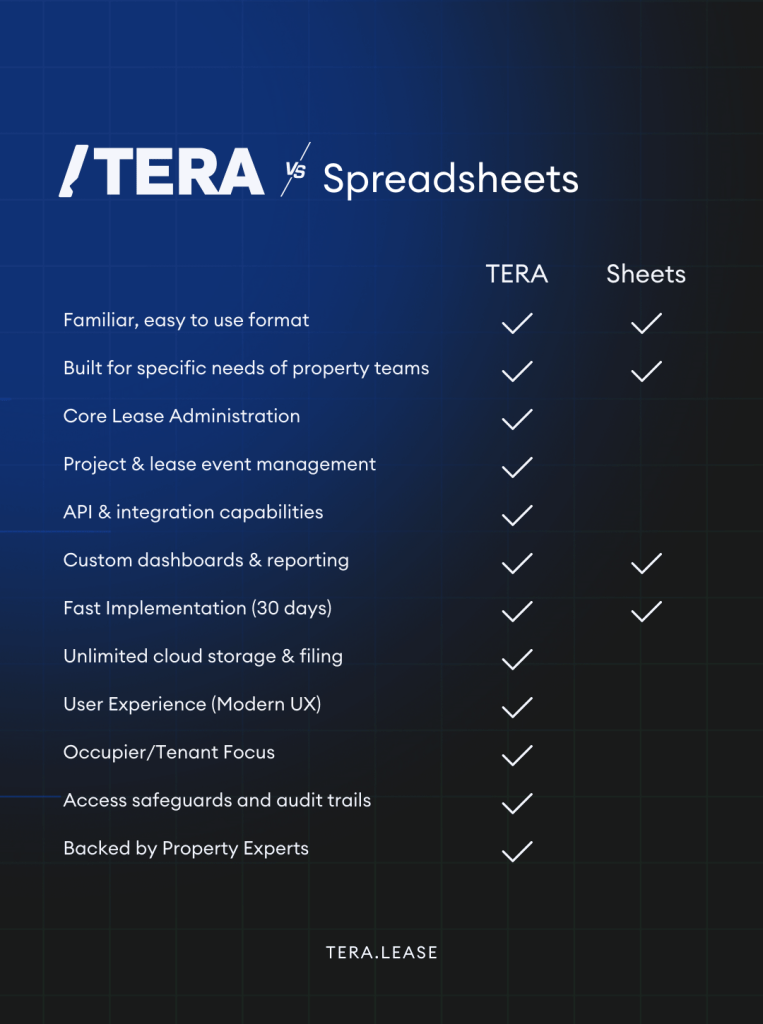
Spreadsheets are a popular choice for managing leases because they’re easy to use and set up. However, as your lease portfolio grows, you might notice they can’t keep up with your company’s pace.
Here are five clear signs that it’s time to move beyond spreadsheets and consider a more robust lease management solution.
1. You nearly missed a key lease deadline
If you’ve ever felt that panic after missing or almost missing a lease event, you’re not alone. Spreadsheets rely on manual updates and personal reminders. Without automatic alerts or a good way to track changes, it’s easy to miss something important. As teams and processes change, and with human error always possible, these mistakes can become costly.
2. Low confidence in your data
Does your team have a “final_final_version3.xlsx” floating around? When lease trackers live in multiple folders, formats, or inboxes, confidence in the data fades fast. And when it comes to lease obligations, second-guessing is risky.
When it’s unclear which file is current, decisions take longer and mistakes are more likely. A solution with an audit trail, permission controls, and a consistent way to enter data can make a big difference.
3. Reporting is slowing you down
Updating lease data for reports can be time-consuming, and the information may be outdated or incorrect the time it’s shared. As costs rise and lease events approach, it’s hard to keep track of everything. Without structured data and customised views, you might miss opportunities or make decisions based on old information.
4. Teams struggle to get the information they need
Spreadsheets are all or nothing. Every department is interested in different aspects of a property portfolio. Permissions-based viewing of key information provides insights for each stakeholder’s needs.
Finance looks for payment schedules, legal tracks obligations and real estate monitors performance and costs. If all this data is hidden in spreadsheets or only certain teams can access it, your entire portfolio is at risk. Permissions-based viewing or feeding key information into wider systems through an open API keeps your data structured and clear, while providing insights for each stakeholder’s needs.
5. Your growing portfolio Is getting harder to manage
As your lease portfolio grows, managing it with spreadsheets gets harder. It becomes tough to control access, avoid mistakes, and keep everyone on the same page. What began as a simple fix can soon turn into an inefficient tool that holds you back.