It’s early in 2026, but we’re already noticing clear trends in how occupiers approach lease management. After talking with early adopters and listening to market feedback, we’ve identified the key trends shaping what’s next.
→ Trend 1
ESG and sustainability are becoming core to lease strategy
More occupiers now consider sustainability when making lease decisions. They want to know the carbon footprint of their properties, track energy use, and make choices that support their ESG goals.
One early customer shared that they now track energy data for every property. They want to see which locations are most efficient and which need upgrades, and this is shaping their lease renewal choices.
This trend is where TERA’s reporting capabilities can help, as it connects to any energy management system your company uses. With the ability to integrate, occupiers can track and report on ESG metrics.
→ Trend 2
Flexibility is the new priority
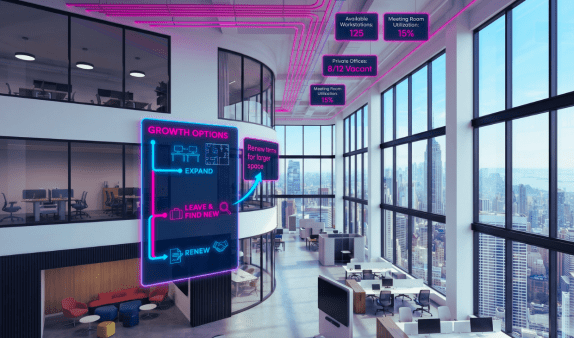
Recent years have changed how companies think about their real estate and workspace portfolios. They want flexibility, shorter leases and the ability to expand or contract quickly.
One of our early customers told us that they’re now prioritising flexibility in their lease negotiations. They want break clauses and options to shift as needed to align with their strategy. If their needs change, the chance to exit and reduce costs becomes a key consideration.
This is changing how occupiers approach lease management. It’s not just about managing the lease – it’s about managing flexibility and optionality.
→ Trend 3
Data-driven decision making is essential
Occupiers are increasingly making real estate decisions based on data. They want to check in on their portfolio performance, see trends and make strategic decisions based on complete information.
One of our early customers told us that they’re now using TERA to analyse their portfolio and upcoming opportunities. They’re identifying underperforming properties, spotting opportunities to renegotiate and making strategic decisions based on data.
This is validating our focus on analytics and reporting.
→ Trend 4
Integration with finance is critical
Occupiers want their lease management system to integrate seamlessly with their accounting and finance systems. They want data to flow automatically and eliminate manual data entry.
One of our early customers told us that they were spending hours every month moving data from TERA to their accounting system or chasing updates from finance. With a flow of key data from an Enterprise Resource Planning (ERP) tool, our integration automatically updates data flow and financial visibility.
→ Trend 5
Remote teams need better collaboration tools
Many occupiers have distributed teams – real estate managers in different locations, finance teams working remotely, brokers and lawyers working with the company virtually and disconnected.
One of our early customers told us that they needed better tools for collaborating with their distributed team. They wanted to be able to share information securely. They wanted to track who made what changes. They wanted to move projects forward faster.
This is pushing us to enhance our collaboration features.
→ Trend 6
Compliance and risk management are top priorities
Occupiers are increasingly focused on compliance and risk management. They want to ensure they’re meeting all their obligations. They want to avoid missing critical dates. They want to manage risk.
One of our early customers told us that compliance is now a board-level issue. They want visibility into their compliance obligations. They want to ensure nothing is missed.
This validates our focus on critical date tracking and automated reminders.
What this means for TERA
These trends are shaping our product and we’ve built features that address these trends:
→ ESG tracking – Connect to your BMS or ESG tools to track and report on sustainability metrics
→ Flexibility management – Prepare and plan strategically for break clauses, options and flexibility
→ Advanced analytics – Tools to analyse portfolio data for data-driven decisions
→ Finance integration – Seamless integration with accounting and finance systems
→ Collaboration tools – Better tools for collaborating with distributed teams
→ Compliance management – Enhanced tools for managing compliance obligations
The bigger lease management picture
These trends point to a bigger shift in how occupiers think about real estate. Real estate is no longer just about finding and using space. It’s about managing a strategic asset and looking at it as an investment across all stages of occupation.
Data-driven decisions, managing risk and compliance provide full flexibility and options for ongoing future-proofing.
TERA is positioned perfectly to support this shift. We’re building the tools that occupiers need to manage real estate as a strategic asset.
What’s next for TERA
As we move through Q1 2026, we’ll be launching features that address these trends. We’ll be listening to our customers and continue strengthening a product that helps occupiers manage their real estate more effectively.
If you’re interested in seeing how TERA can help you manage these trends, we’d love to talk. Speak to our team about a portfolio audit or to trial TERA.